| Name | Dieter A. Fensel |
| Birthday: | October 1960 |
| Birthplace: | Nuremberg |
| Nationality: | German |
| Addresses: | www.sti2.org www.sti-innsbruck.at |
| Last Update: | January 5, 2010 |
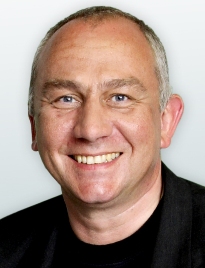
Dieter A. Fensel
|
Dieter A. Fensel |
||||||||||||||||||||||
Univ.-Prof. Dr. Dieter Fensel holds a professorship at
the University of Innsbruck and is the director of STI Innsbruck, a Computer Science research institute with over
60 employees. He has over 240 publications in the form of scientific books and journals, conferences, and
workshop contributions. He has co-organized over 200 conferences and workshops. He has supervised over 40
Master’s and Ph.D.’s theses and is a recipient of the Carl-Adam-Petri-Award of the Faculty of Economic Sciences from the University of Karlsruhe. His current research interests focus on the development and application of
semantics to all areas of Computer Science. Dieter Fensel is also the co-founder and president of the newly established
Semantic Technology Institute (STI) International, whose major aim is to establish semantics as a core pillar of
modern Computer Science. STI International was the natural progression of DERI International where Dieter Fensel
established expedient relationships with major research centers around Europe, Asia and America. The current
membership of STI International is comprised of leading research, industrial, and governmental bodies who share a
common vision of the next Web generation. Below is a brief summary of Dieter Fensels curriculum vitae, particularly
highlighting his achievements in the past decade.
Dieter Fensel has contributed to the successful completion of 33 other projects funded by European, Irish, Austrian and Tirolean organizations. These projects include On-To-Knowledge, which was the first publicly funded European Semantic Web project, coordinated by Dieter Fensel and IBROW the first publicly funded European Semantic Web Service project in which Dieter Fensel was a key scientist. In his role as project coordinator of both the OntoWeb and KnowledgeWeb projects, Dieter Fensel helped to establish the Semantic Web community. In 2003, Dieter Fensel acquired a 12 million Euro grant from the Irish government in the DERI-Lion project which enabled the founding of the DERI research institute at the National University of Ireland Galway. The most crucial projects following on from IBROW (e.g. SWWS, DIP, SOA4ALL and COIN) have established WSMO (Web Service Modeling Ontology) as the core conceptual model for Semantic Web Services. From a languages and reasoning perspective the work in SEKT, KnowledgeWeb, and LarKC have helped to develop the WSML language framework as well as the reasoning methods that underlie them.
Through the many research initiatives that Dieter Fensel has been involved in, he has collaborated with over 200 different
research and industrial partners. Dieter Fensel maintains strong links with these partners including Prof. Studer at the
University of Karlsruhe (DE), Dr. Domingue at the Open University (UK), Dr. Petrie at Stanford University (US),
Prof. Dr. van Harmelen, Prof. Dr. Schreiber, and Prof. Dr. Akkermans at the Free University of Amsterdam (NL),
Prof. Dr. Wahlster at DFKI in Saarbruecken (DE), Prof. Dr. Hendler at the Rensselaer Polytechnic Institute (US),
Sir Prof. Dr. Berners-Lee at the Massachusetts Institute of Technology (US), Prof. Dr. Shadbolt at the University of
Southhampton (UK), Prof. Dr. Han at the Won Kwang University (KP), and Prof. Sheth at the University of
Georgia (US). From an industry perspective Dieter Fensel has tight links with many key players in industry including
Verizon, Austrian Telcom, SAP, IBM, HP, British Telecom, Atos Origin, Korea Telecom, and Telefonica.
Dieter Fensel completed his Ph.D. in 1993 with his thesis entitled The Knowledge Acquisition and Representation Language (KARL). KARL allows the precise and unique specification of the functionality of a knowledge-based system independent of the specific implementation details of that system. In 1998, Dieter Fensel continued his works in this area with his habilitation, entitled Problem-Solving Methods: Understanding, Development, Description, and Reuse, where he focused on knowledge management and formal languages. In the mid-1990’s, Dieter Fensel turned his attention to the newly emerging Web and how knowledge management technologies could be applied in this new area. In 1997 he developed Ontobroker, an inference engine capable of reading metadata placed in a HTML file and establishing inferences, which can be considered one of the first Semantic Web applications. In 1997 Dieter Fensel contributed to the creation of the Knowledge Annotation Initiative for the Knowledge Acquisition Community (KA), which built an ontology that was used to consistently annotate Web pages and is akin to the Web 2.0 tagging functionality that began to appear in 2002. After accepting his first professorship position in Amsterdam, Dieter Fensel was the coordinator of the On-To-Knowledge project, the first publicly funded EU Semantic Web project, through which he created OIL, the first systematic ontology language for the Web. OIL was later combined with DAML and this combination paved the way for the Web Ontology Language (OWL) W3C Recommendation. In 1999, Dieter Fensel was involved in the development of the concept of Goal-based Invocation over a distributed network of reasoning resources. The IBROW project, essentially the first EU funded Semantic Web Service project, used CORBA as a middleware layer to enable Goal-based Invocation of functionality on behalf of a given requester. In 2002, Web services replaced CORBA as the core integration technology for business and Dieter Fensel co-authored a seminal paper on the Web Service Modeling Framework (WSMF) which identified the need for four key elements when semantically describing Web services; namely, Ontologies, Web Services, Goals and Mediators. Based on the WSMF, Dieter Fensel established the Web Service Modeling Ontology (WSMO) working group to define a conceptual model for Semantic Web Services which provides a model of the necessary elements to effectively semantically describe Web services. Shortly after establishing the WSMO working group, Dieter Fensel established a group to formalize the WSMO conceptual model and provide a language framework within which the semantic descriptions of Web services could be written. This language framework, called the Web Service Modeling Language (WSML), provides different language variants with different levels of logical expressivity that enable Semantic Web Services to be described with the desirable computational properties. To effectively use these descriptions, Dieter Fensel co-founded the Web Service Execution Environment (WSMX) working group to create an execution environment that could automate the activities in the Web service usage process. Later, Dieter Fensel co-founded the OASIS Semantic Execution Environment Technical Committee (SEE-TC) to standardize the broker services needed in a Semantic Execution Environment such as WSMX.
The subsequent impact of Dieter Fensel’s main research achievements has spanned beyond the purely scientific
community, whereby several of his established concepts and technologies are beginning to play an influential role
on the industrial level. Through his innovative work with semantic technologies and Web Services (see
Ontobroker, KA and On-To-Knowledge projects) Dieter Fensel’s research has gone beyond the existing state of the art
and opened the path to new emerging technologies; technologies that are receiving more and more attention from
both academia and industry. Dieter Fensel’s work on OIL, the first systematic ontology language for the Web,
substantially contributed to the creation of OWL (now a W3C Recommendation), the primary ontology language
for the Web used around the world. By developing the concept of Goal-based Invocation over distributed network
of reasoning resources, and through his contribution to the IBROW project, Dieter Fensel set the foundation for the
succeeding Semantic Web Service research initiatives and technologies. The Web Service Modeling Framework,
with currently more then 500 citations, proposed the use of four key elements when semantically describing Web
services. This idea was further adopted and used for developing semi-automatic Semantic Web Service
technologies. The conceptual model and formal language framework for semantically describing Web services
(WSMO and WSML) developed under the coordination of Dieter Fensel are now the basis of numerous research projects.
Considering the industrial interest in these technologies (STI Innsbruck alone collaborates with approximately 100
industrial partners, including prominent companies like SAP, IBM, HP and Telekom Austria), WSMO can be
considered an emerging de facto standard for semantically described Web Services. WSMX, one of the first
execution environments which automates the activities in the Web service usage process, is the basis of a current
OASIS standardization activity which aims to standardize the broker services needed in a Semantic Execution
Environment. This work is currently carried out by OASIS SEE Technical Committee.
Dieter Fensel has over 240 publications in the form of journals, conferences, and workshop contributions. He has published 15 monographs, authored 1 US patent, accepted over 30 invitations to present or appear as the keynote speaker at several national and international conferences/congresses, and has chaired or contributed to over 200 scientific initiatives, committees, and advisory boards. He has been an executive member in over 50 international projects funded under the Europe IST framework, the Irish SFI framework, the Austrian FWF and FFG, and the Tyrolean TransIT frameworks, and has a current funding ID of €9,942,251. Dieter Fensel is also highly active in collaborating with industry within his past and present projects and his research initiatives involving over 200 different industrial partners. Dieter Fensel is also active as an editor of several high profile journals including Foundations and Trends in Web Science, International Journal of Web Services Research, International Journal on Web and Grid Services, International Journal on Semantic Web and Information Systems, IEEE Transactions on Knowledge and Data Engineering (TKDE), Electronic Transactions on Artificial Intelligence (ETAI), Elsevier's Journal on Web Semantics: Science, Services and Agents on the World Wide Web, IEEE Intelligent Systems (IS), Knowledge and Information Systems: An International Journal (KAIS), Web Intelligence and Agent Systems (WIAS), and Lecture Notes in Computer Science (LNCS) - Sublime Semantics in Data Management. In 2003 Dieter Fensel acquired 12 million Euro from the Irish government in the DERI-Lion project to establish the Digital Enterprise Research Institute (DERI) at the National University of Ireland, Galway. Following this, Dieter Fensel founded a second DERI research center at the University of Innsbruck, which has subsequently been renamed to the Semantic Technology Institute (STI) Innsbruck, of which Dieter Fensel is the director. Both of these institutes have matured into leading research centers in the Semantic Web community. In 2007 Dieter Fensel co-founded the Semantic Technology Institute (STI) International with the aim of establishing semantics as core pillar of modern Computer Science. STI International, of which Dieter Fensel is the current president, is made up of research, industry and governmental bodies with a common interest in enabling the next generation of the Web. Also in 2007, Dieter Fensel co-founded a start up company Seekda whose mission is to facilitating on-demand usage of services over the Web. Seekda is the first global Web service search engine that provides access to publicly available Web services; in its first year, it has already become the world’s largest registry of Web services.
During his time at the University of Innsbruck, National University of Ireland Galway, Vrije Universiteit Amsterdam, University of Amsterdam, and the University of Karlsruhe, Dieter Fensel has taught over fifty courses at various levels of education on topics including Formal Specification Languages, Software Engineering, Data Warehousing, the World Wide Web, Electronic Commerce, Agent-based Information Access, Semantic Web and Ontologies. He has also supervised 36 Masters theses and has been a member of the following 11 Ph.D. committees: Annette ten Teije, an assistant professor at the Vrije Universiteit Amsterdam; Bernd Schnur, a professor at the Cologne University of Applied Sciences; Georg Göbel, an assistant professor at the Institute of Biostatistics and Documentation at the University of Innsbruck; Heiner Stuckenschmidt, a professor at the University of Mannheim; Michael Klein, a post doctoral researcher in the AI group at the Vrije Universiteit Amsterdam; Borys Omelayenko, an industrial software engineer; Anna V. Zhdanova, a senior researcher and project manager at the Telecommunications Research Center in Vienna; Elena Simperl, a senior researcher and vice director of the Semantic Technology Institute (STI) Innsbruck; Sinuhe Arroyo, a corporate development manager for Phion AG, Innsbruck; and Jos de Bruijn, an assistant professor in the KRDB group at the University of Bolzano. Dieter Fensel currently has 6 post doctoral researchers in the Semantic Technology Institute (STI) Innsbruck who are actively involved in the execution of a number of key EU and Austrian funded projects essential to the further development of the Semantic Web and Semantic technologies. Finally, Dieter Fensel currently supervises several Ph.D. students pursuing their theses in similar topics.
Dieter Fensel is highly active in the Semantic Web community. He is a co-founder of the European Semantic Web
Conference series, the European Semantic Technology Conference series, and the Asian Semantic Web Conference
series, and the International Semantic Web Conference Series and continues to be involved in the organization of
these series. He was a key force in bringing problem solving methods to the Web and was heavily involved in
establishing the Semantic Web community in Europe through his position as the coordinator of the OntoWeb
project, and later the Knowledge Web (Network of Excellence). In 2007 Dieter Fensel established the Semantic
Technology Institute (STI) International with the aim of further enhancing the Semantic Web community. Through
STI International, Dieter Fensel continues to promote the Semantic Web community by spearheading many of the new
research directives and projects in this field.
To date Dieter Fensel has over 240 scientific publications. A selection of some of his most prevalent journal publications, those which have been accepted based on international caliber, are listed below. The selection of journal publications was based on their general overall impact. The criterion for the evaluation of their overall impact was based on the caliber of the journal in which the article was published, in parallel with the number of subsequent citations from other peer-reviewed international journals. For the computation of the citation index, we excluded self-citations, citations in proceedings etc. The citation index was computed using Google Scholar and is current as of February, 21, 2008.
Dieter Fensel has published over 10 research monographs in recent years, all of which have received critical acclaim before an international community of readers.
Dieter Fensel, a strong advocate for open source and royalty free licensing in order to support collective and accelerated software development, has been granted the following patent:
To date Dieter Fensel has accepted over 30 invitations to present or appear as the keynote speaker at several national and international conferences/congresses. Below are a select few from the past 10 years.
In the past 10 years, PI has chaired or contributed to over 200 scientific initiatives, committees, and advisory boards. Below is a list of a few international conferences he has organized dating back to 2002.